Fig
An ancient fruit cultivated for millennia, now grown worldwide.

The fig is the edible fruit of Ficus carica, the common fig, a deciduous tree or large shrub in the flowering plant family Moraceae. Native to the Mediterranean region and western and southern Asia, it has been cultivated since ancient times and is now widely grown throughout the world.
- Scientific name
- Ficus carica
- Family
- Moraceae
- Native region
- Mediterranean region, western and southern Asia
- Height
- 7–10 m (23–33 ft)
- Fruit length
- 3–5 cm (1–2 in)
- World production (2020)
- 1.26 million tonnes
- Top producer
- Turkey (25% of world total)
Lore & Background
The fig is among the earliest plants cultivated by humans. This suggests intentional cultivation a thousand years before other crops. In ancient Israel, figs were a staple crop, with two annual harvests: an early crop eaten fresh and a later summer crop dried or pressed into fig-cakes. Figs are frequently mentioned in the Hebrew Bible and depicted in the Lachish reliefs alongside grapevines and date palms. Figs were widespread in ancient Greece, described by Aristotle and Theophrastus. Aristotle noted two kinds of figs—the cultivated fig that bears fruit and the wild caprifig that assists it—and recorded that fig wasps (psenes) emerge from wild figs to enter cultivated ones. Theophrastus observed that Greek farmers tied wild figs to cultivated trees, analogous to date palm pollination. Romans also valued figs; Cato the Elder listed several strains, and Pliny the Elder recorded thirty varieties.
Reader's Guide
The fig's significance lies in its long history of cultivation and its role as a staple food across multiple ancient civilizations. As possibly the first intentionally cultivated plant, it marks a key step in the development of agriculture. Its fruit, a syconium (an infructescence containing multiple small fruits), is eaten fresh or dried and processed into jam, rolls, biscuits, and desserts. Most commercial production is dried or processed because ripe fresh figs are easily damaged in transport. The fig tree tolerates moderate seasonal drought and can grow in hot-summer continental climates. Its milky sap is an irritant to human skin. The fig's legacy includes its mention in classical texts by Aristotle, Theophrastus, Cato, and Pliny, and its continued cultivation as both a food and ornamental tree, with cultivars like 'Brown Turkey' and 'Ice Crystal' receiving the Royal Horticultural Society's Award of Garden Merit in the UK.
Did You Know?
- The fig fruit is botanically an infructescence, containing multiple small single-seeded fruits (drupelets) lining its interior.
- The word 'fig' derives from Old French figue, from Latin ficus, likely from a Mediterranean source possibly in a Semitic language.
The Boundaries of the Category
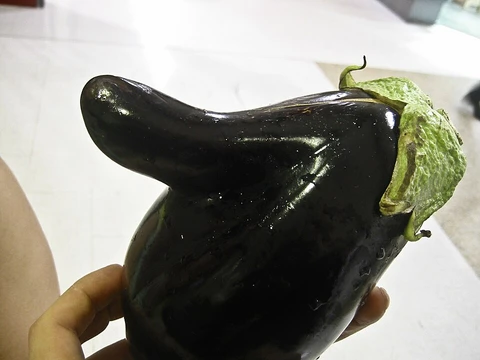
The question of what qualifies as a vegetable has no single, universally agreed-upon answer. At its widest, the term encompasses any edible portion of a plant—roots, stems, leaves, flowers, fruits, and seeds alike. Yet in everyday culinary practice, the boundary is drawn more arbitrarily, shaped by cultural tradition rather than botanical logic. Savoury fruits like tomatoes and squash are routinely grouped with vegetables, while flowers such as broccoli are treated the same way, yet cereal grains and nuts are excluded despite being plant-derived. Supreme Court decision Nix v. Items like eggplants and bell peppers share this dual identity. Even edible fungi and seaweed, which are not plants at all, are commonly lumped into the vegetable category in kitchens and markets worldwide.
A Word in Evolution
The English word vegetable first appeared in written records during the early fifteenth century, borrowed from Old French. Its original scope was far broader than today's kitchen-shelf meaning: it simply denoted all plants, a usage that persists in biological and scientific writing to this day. The root traces back to Medieval Latin vegetabilis, carrying the sense of growing or flourishing, which itself evolved from an earlier Late Latin meaning of being enlivening or quickening. For centuries the word floated in this general, plant-wide sense. In technical and scientific contexts, however, the adjective vegetable retains its much wider original scope, referring to anything of plant origin whether edible or not, as in phrases like vegetable matter, vegetable kingdom, or vegetable origin.
From Foraging to Farming
Long before the first seed was deliberately sown, human beings survived as hunter-gatherers, foraging wild fruits, nuts, stems, leaves, corms, and tubers while hunting animals for protein. The transition to agriculture likely began in tropical forest clearings, where people identified useful plant species and encouraged their growth while removing unwanted competitors. The earliest confirmed evidence of domesticated grasses such as wheat and barley comes from the Fertile Crescent in the Middle East, though parallel developments almost certainly occurred elsewhere. Civilizations built their food cultures around regional staples: the Aztecs paired maize tortillas with tomatoes, avocados, beans, and peppers; the Incas relied on maize in lowlands and potatoes at altitude, supplemented by quinoa, peppers, and avocados; ancient Chinese diets centered on rice in the south and wheat in the north, accompanied by yams, soybeans, turnips, and garlic.
Nourishment and Global Trade
Vegetables occupy a central place in human nutrition, prized for being low in fat and carbohydrates while delivering generous amounts of vitamins, minerals, and dietary fiber. Nutrition professionals widely recommend consuming five or more portions of fruit and vegetables daily, and the foods can be enjoyed raw or cooked depending on preference and culinary tradition. In the modern era, vegetable production has become a truly global enterprise. China stands as the world's largest producer, and international agricultural trade means that consumers in one country can purchase crops grown in distant regions. Cultivation now extends even to climates that would not naturally support a given crop, thanks to protected growing environments. The scale of operations ranges enormously, from small subsistence farmers in rural Africa, Asia, and South America who grow just enough to feed their families and trade any surplus, to vast agribusiness operations managing thousands of acres devoted to a single product. After harvest, the crop typically moves through stages of grading, storage, processing, and marketing before reaching the consumer's table.
Frequently Asked Questions
What is a fig?
A fig is the edible fruit of Ficus carica, a deciduous tree or large shrub that belongs to the flowering plant family Moraceae. It is one of the oldest fruits humans have deliberately cultivated.
Where are figs originally from?
Fig trees are native to the Mediterranean basin and the western and southern parts of Asia. From those regions, cultivation spread across the globe over thousands of years.
How large does a fig tree and its fruit get?
A mature Ficus carica typically grows to a height of roughly 7 to 10 meters, while each individual fruit measures about 3 to 5 centimeters long.
More in Fruits And Vegetables 1-22
Spotted an error? Know more?
This is a living reference — every entry is fact-audited, and reader corrections feed straight into our audit queue. Suggest an edit · See this site's audit record